
Meet Felicia
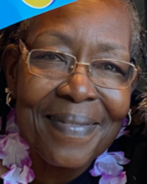
Faith Over Fear – God Is Always Near
by Crystal Brasiola Waters
It was the year 2000 — the height of the Y2K craze. The world had just exhaled after bracing for planes to fall from the sky and computers to shut civilization down at the stroke of midnight. Life, however, moved forward in ordinary ways — work shifts, coffee breaks, grocery lists, school pickups.
And Felicia kept showing up for hers.
She was working as a nurse at a methadone clinic then — a job that required equal parts clinical precision and human compassion. She had both. Patients gravitated toward her warmth, her steady voice, the way she could be firm without being cold. At forty years young, she was vibrant — the kind of woman whose energy entered a room before she did. Spunky. Quick with humor.
Healthy by every outward measure.
Which is why the change in her vision felt so easy to dismiss at first. Felicia wore glasses but scheduled a doctor’s appointment, expecting something routine — perhaps a change in prescription, adjustment to blood pressure meds, or stress. Something explainable. Fixable. Temporary.
She went alone.
As a nurse, she knew the rhythms of these spaces. She knew what normal looked like. The doctor’s tone shifted after reviewing her labs — professional, but careful. He explained that her vision issue might not be ophthalmologic at all. He wanted her to see a specialist.
A nephrologist.
The word landed heavily, though she didn’t yet know why.
She left the appointment with a referral slip in her hand instead of reassurance. Walking to her car, the paper felt heavier than it should have — as if it carried news her body already sensed but her mind hadn’t accepted.
The appointment with Nephrology came quickly. More blood work. More questions. More waiting. Then the consultation. Felicia sat across from the specialist, who spoke gently, but directly — the way doctors do when there’s no painless way to deliver the truth. Her kidneys were failing. Not struggling. Not impaired. Failing.
The sentence that would divide her life into Before and After: “Your kidneys are failing, and you’ll need a transplant, the doctor said.” Time didn’t stop — but it staggered. Forty years young. Medically trained. The caregiver — not the patient — and suddenly facing organ failure.
She left that office carrying more than a diagnosis. She carried the weight of dialysis discussions, transplant lists, mortality statistics — language she had spoken clinically to patients before, never imagining it would one day be spoken to her.
Outside, the world looked the same — cars passing, people walking, life indifferent to personal catastrophe.
But nothing was the same again.
In 2004, she started dialysis at Gottlieb Memorial Hospital. Following a single round, she received the call. Barbara — a real-life angel — walked through the doors at Loyola University Medical Center. With a rare blood type, she wanted to donate a kidney, and she was a perfect match for Felicia.
“Barbara drove all the way to Loyola from Wisconsin. She could have gone to a hospital much closer to donate, but she just showed up at Loyola and walked through the doors as a living donor. My whole medical team was in shock — and so was I. Barbara was not human. She was an angel on earth. I am convinced of it,” Felicia said.
The surgery was a success.
The recovery, however, was lengthy. At its peak, she took nearly 40 pills a day — immunosuppressants, anti-rejection medications, and others to counteract side effects. Daily house calls from her nurse for blood draws, along with endless doctor visits, created a protective bubble around her that often felt constricting.
Nevertheless, the experience transformed her life completely. Felicia’s gratitude outweighed it all.
She had been given a second chance at life — and she was forever grateful.
She eventually returned to work, transitioning into a nursing role at the VA, where she continued caring for veterans — her life moving to a new rhythm.
Fast forward to 2017. Felicia woke from a deep sleep with severe leg pain.
“My leg was so hot — it felt like it was inside of a rotisserie chicken roaster. I knew something wasn’t right. I went to the Emergency Room,” she said.
The diagnosis: Spinal Discitis Infection.
An infection that would eventually compromise her transplanted kidney and place her into a 10-day coma.
During that coma, Felicia experienced what she describes as an out-of-body experience. “I watched overhead, as my son sat beside my hospital bed holding my hand and praying for me to wake up. For days, as I laid unconscious, watching siblings, grandchildren, nieces, and nephews come and go — each kissing my hand and forehead and praying for my return, she said.”
On day ten, she woke up. She returned to dialysis — a journey that would continue until 2022. July 4, 2022 — she received the second call.
“Felicia, we have a kidney for you,” they’d say. Though it was her second transplant, the experience was drastically different from the first. “Medical advances have come so far since my first transplant. On my second day post-op, the doctor pointed at the door and said, ‘There’s the door!’” Felicia recalled.
To donor families — both living and deceased — Felicia’s message is clear: “Organ donation is a life-changing decision. It’s a second chance at life. Receiving an organ is humbling — it fills you with so much gratitude, and it pushes you to fight for life.”
Felicia remains active in her community, volunteering with several organizations, including OTS. She is a champion for organ donation — both living and deceased — and a role model of faith and perseverance in the face of adversity.
