
What is Kidney4?
After your first meeting with a transplant hospital, someone may encourage you to find a living kidney donor.
Then the advice starts: start a Facebook page with great content, build a website, host events, and get your campaign in front of as many people as possible. It's a great list. It sounds great. It's even motivating. But then reality hits – "how do I do that?"
Most patients cannot do all that work themselves. Patients are carrying the weight of their disease that comes with dialysis, medical appointments, fear and fatigue. Most of you are not marketers, copywriters or web designers. Likely, you’re also limited in time and energy to build a donor campaign from scratch. Your transplant team, while excellent medically, rarely has the extra staff or spare time to build and run a personalized donor marketing campaign for you.
That is why Kidney4 exists.
Kidney4 does the hands-on work of building your personalized campaign — the messaging, website, visuals, customized social media, donor education content, and real outreach tools — so you are not left trying to build a donor marketing campaign alone.
Kidney4 was born from urgency. It was used to save a life. Want proof? Our first Kidney4 campaign produced 42 online donor evaluations, 18 people who began medical testing, and one donor.
Questions? Contact Ask@Kidney4.org.
Disclaimer: Kidney4 is an independent organization featured on the OTS website as a resource for patients and families. Kidney4 is solely responsible for its own statements, services, and content. Organ Transplant Support does not manage, supervise, or control Kidney4’s work or materials.
Kidney4 Donor Campaigns


We Build Your Donor Campaign!
Kidney4 does the hands-on work of building your donor campaign.
Your website and social media campaign are free. If you want printed materials or paid advertising, you pay our cost. No profit.
Kidney4 doesn't hand you a checklist with examples and tell you to figure out the rest. We build the campaign ourselves using a patient’s story, photos, videos and transplant-center information.
Kidney4 builds a campaign for each patient with three integrated marketing tools:
Website: We create a personalized website that brings your story to life through pictures, written narrative, and video. We design it and build it. Your website is designed to make people curious, care, and start an online evaluation with your transplant hospital. Your website directly addresses the most important issues on the minds of potential donors at the beginning — fears and concerns about safety, risk, and financial exposure — the things most people think but never say. Kidney4 gives no medical advice to anyone – period.
Social Media Content: We create a month’s worth of Facebook content that helps your story gain traction. That includes posts, visuals and videos, and links back to your website and transplant hospital, along with critical insights from National Kidney Registry and Alliance for Paired Kidney Donation. The goal is not random posting. The goal is a campaign with a compelling flow that people can actually follow, share, and respond to.
Advertising Outreach: We build the printed and physical tools that spark curiosity and extend your story far beyond your social media network.
What tools? A business card for your 30-second elevator pitch, flyers, rack cards, bumper stickers, car magnetics, yard signs, and other visually compelling materials that create curiosity and interest.
What do they do? Professionally designed advertising drives people to your website and your transplant hospital's online evaluation. It's all about visibility and messaging.
Kidney4 combines creative design, messaging, and smart engineering to build a personalized donor campaign that is visually strong, emotionally clear, and easy for potential donors to act on.
From start to finish, it takes 2-3 weeks to design and build your website and social media content. How does the process work? We ask you questions – it's sort of like filling in the blanks – and you give us pictures and stories. We take it from there and will collaborate with you for checks and reviews during the process.
We can't guarantee you'll get a donor, of course, but our work together will bend the curve in your favor so more potential donors see you. There's one thing we know for sure… you'll have fun collaborating with us and your friends and family will appreciate what you've created to find a living kidney donor.
You bring the story. Kidney4 builds the campaign.
Questions? Contact us: Ask@Kidney4.org.
Disclaimer: Kidney4 is an independent organization featured on the OTS website as a resource for patients and families. Kidney4 is solely responsible for its own statements, services, and content. Organ Transplant Support does not manage, supervise, or control Kidney4’s work or materials.
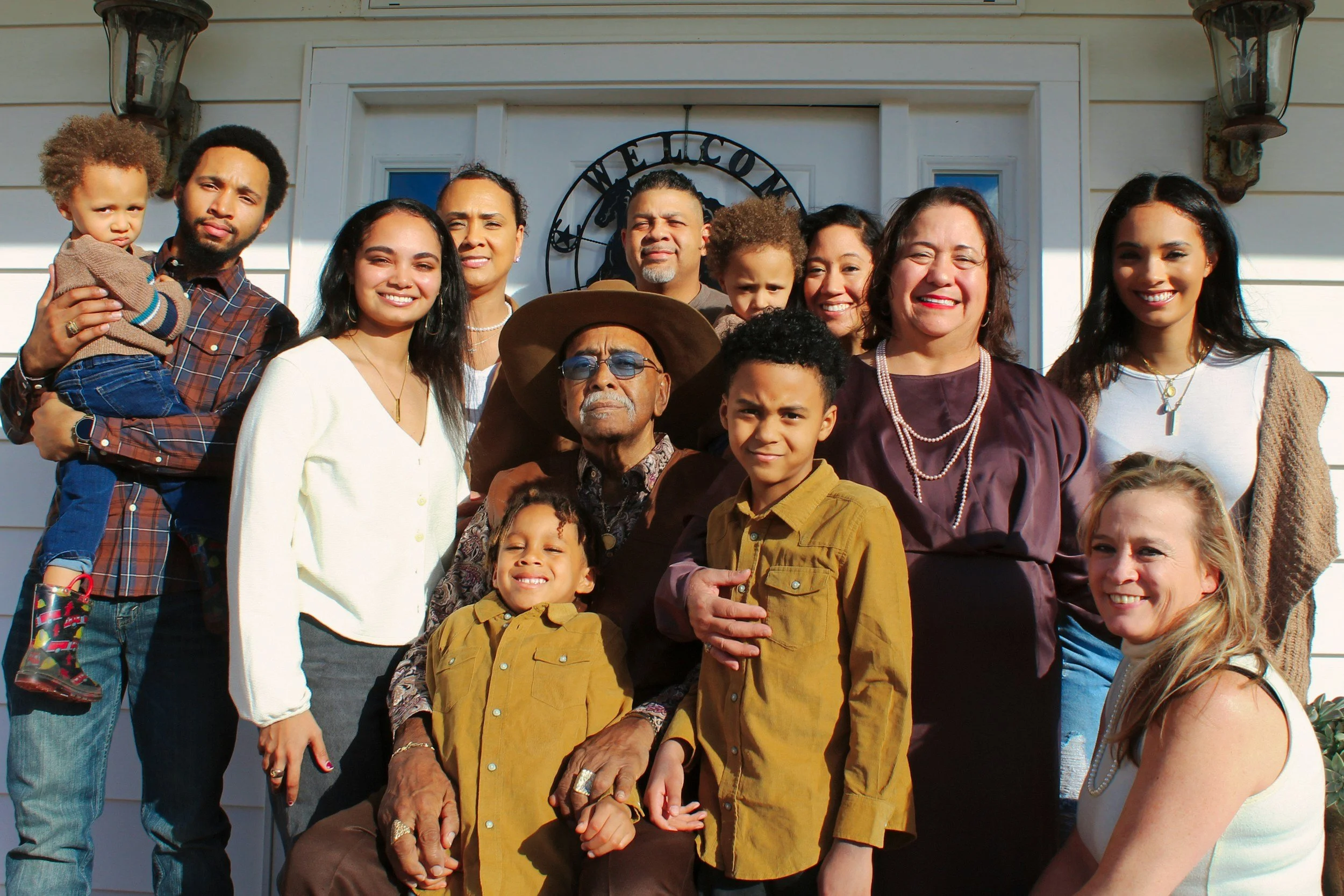





Top Donor Concerns
Most potential donors do not start with commitment. A few are altruistic, but most start with questions and concerns – the sensitive ones they rarely ask out loud. Kidney4 helps patients proactively address donor concerns early, using data from research studies and information from transplant centers and respected kidney organizations.
The questions and answers below are based on research by Kidney4 of the top 30 issues for donors and the top 30 issues for patients.
How Risky is Donating a Kidney?
Any surgery carries risk. Here are real numbers from recent medical research and comparisons to other common surgical procedures.
The mortality rate for kidney donation is 9 in 100,000 per the latest research (2022), down from 30 in 100,000 (2009). Transplant surgery is about as safe as a tonsillectomy (30 in 100,000 for adults), a non-emergency appendectomy (10-50 in 100,000), and much safer than elective surgeries in a hospital (300 in 100,000). Why? Better selection screening and surgical techniques. Innovative medicines.
The medical standard used by kidney transplant hospitals for donors is called "Net-Zero Harm." That means a donor only gets approved for donation if the predicted, mathematical risk of developing kidney failure in the future is no higher than a health person who never donated. How does a transplant hospital do that? Extensive evaluation – metabolic, imaging, cancer screening, cardiovascular and genetic testing. So, only the healthiest people get approved. That's why Johns Hopkins research shows that living kidney donors live as long as "healthy non-donors." It's not because kidney transplant makes them healthier. It's because of "selection bias" or the "Healthy Donor Effect" – that's how careful and comprehensive the evaluation process is.
Sources:
https://jamanetwork.com/journals/jama/fullarticle/2822922
https://jamanetwork.com/journals/jama/fullarticle/185508
https://kdigo.org/guidelines/living-kidney-donor/
https://kdigo.org/wp-content/uploads/2017/07/2017-KDIGO-LD-GL.pdf
https://pubmed.ncbi.nlm.nih.gov/24481159/
If I donate but something happens to my remaining kidney later, am I stuck?
No. But an ounce of prevention is worth a pound of cure, so before you go through testing at a transplant hospital, ask your transplant coordinator about working with the National Kidney Registry or Alliance for Paired Kidney Donation. These organizations provide prioritization for a new living kidney - it's like going to the "front of the line" - if something happens down the road. The median waiting time for a new living kidney with the National Kidney Registry is 1.8 months.
Just know that the risk of something happening to your remaining kidney after donation is rare. In fact, the risk is significantly lower than an average non-donor in the general population per the National Institutes of Health.
Sources:
https://paireddonation.org/donorprotect/
https://pmc.ncbi.nlm.nih.gov/articles/PMC5108186/
Even if I want to donate, I can't afford time off work or all the out-of-pocket costs.
Medical costs and expenses are the unspoken root causes of most donors' hesitancy.
First, your medical expenses are covered by the patient's insurance. Second, the financial impact of your donation is "cost neutral" by design. That means you are reimbursed for lost wages and a range of out-of-pocket costs through your transplant hospital's partnership with the National Kidney Registry ("Donor Shield"), the Alliance for Paired Kidney Donation ("Donor Protect") or the federally funded National Living Donor Assistance Center. A transplant coordinator will provide you with benefit and eligibility details.
Sources:
https://www.kidneyregistry.com/for-donors/faq-for-donors/
https://www.kidneyregistry.com/donorshield/
https://www.donorshield.com/faqs-category/cost-reimbursement-lost-wages/
https://paireddonation.org/donorprotect/
https://paireddonation.org/wp-content/uploads/2020/11/APKD-Donor-Protection-Program-Summary.pdf
https://www.organdonor.gov/learn/process/living-donation
What happens if I want to donate but I'm not a match?
If you are healthy and approved by the transplant hospital, your kidney will be paired with another patient "in the pool" nationwide and a better-matched donor will be paired with your intended recipient. It's called paired donation. A donor does not have to be a perfect blood or tissue match to save a life.
A lot of people quietly rule themselves out because they hear the word “match” and assume it means a blood type match or perfect genetic fit. Kidney transplant matching between donor and patient actually refers to three areas: blood type compatibility, tissue typing, and crossmatch testing. A donor may be considered a workable match even if the donor and recipient do not share many tissue markers, as long as the blood type is compatible and the crossmatch is negative. That is why a donor does not have to be a “perfect match” to still help.
Sources:
https://www.uclahealth.org/medical-services/transplants/kidney-transplant/kidney-exchange
https://www.kidneyregistry.com/for-donors/faq-for-donors/
Still Have Questions? Contact Us: Ask@Kidney4.org.
Disclaimer: Kidney4 is an independent organization featured on the OTS website as a resource for patients and families. Kidney4 is solely responsible for its own statements, services, and content. Organ Transplant Support does not manage, supervise, or control Kidney4’s work or materials.